Bonn, Germany. "The fact that the First Lady Michelle Obama started an organic garden at the White House, provoked a national debate on issues such as food, obesity, health and sustainability. Unfortunately, the attitude of "green" was held in the courtyard of the White House has moved to the roof.
In 1979, President Jimmy Carter installed solar panels on the roof of the West Wing of the White House under a new strategy for solar energy. "In 2000," Carter said, "The solar water heater behind me and that is being installed today, will continue in the same place giving energy efficient and cheap. For the next generation, this solar heater can be a curiosity, a museum piece, an example of the road not taken, or may be a small part of one of the largest and most exciting adventures that the American people ever undertaken. "
Sad but true, after assuming the presidency, President Ronald Reagan did remove the panels and some of them, in fact, ended up in museums. The environmental activist Bill McKibben, founder of 350.org, I asked: "Do you know where one of these panels? It's in the private museum of Chinese entrepreneur who built the largest solar thermal company on the planet: Himin Solar. In China, we have installed these panels sixty million. "
In 1990, the White House panels were removed from government deposits and put into use again by the University Unity College in Maine. To defend the solar energy, McKibben joined a group of students from Unity College, brought together a panel from college to the White House and asked to be put back on the roof, but the White House refused.
One of the campaign promises of President Barack Obama was to create millions of green jobs. Van Jones hired Obama as the czar of the green jobs of the White House and fired him shortly after Jones became the target of attacks by what he called a "cruel smear campaign" led by the news channel Fox News. Obama is now facing a huge unemployment problem that threatens not only the livelihoods of tens of millions of people, but also Democrats' political prospects.
Here in Bonn, the answer could not be more clear: use the money from the economic stimulus packages and develop policies to strengthen "green" industry sector and create a green jobs, for example, manufacture, installation and technical service of solar panels.
Germany, one of the most advanced economies in the world, did just that.
As reported by the Financial Times last year the German photovoltaic cell installations became more than half of those in the entire world. I'm here
to cover the 30 th anniversary of the awards "Right Livelihood Awards, also known as the Alternative Nobel Prize", a wonderful gathering of dozens of activists and thinkers from around the world. Among them, Hermann Scheer, Member of German Parliament.
Upon receiving the Right Livelihood Award, Scheer said, "Solar energy is the energy of the people. Use this energy does not require large investments by a few huge corporations, but requires billions of investments by billions of people who have, thus, the opportunity to stop being part of the problem to pass be part of the solution. "
Germany is making it come true. Solar energy equipment on a small scale, both residential and commercial, not only create jobs, increase efficiency and reduce costs, but also allow the owners of these systems to sell excess energy to power plants, investing the sense of their meters, provided that the conditions permitting.
Here in Bonn, are also representatives of the Grameen Shakti organization in Bangladesh. This organization provides loans and offers technical assistance to rural poor people so they can install solar energy systems in their homes, often thus providing the possibility of access to electricity for the first time in the history of the family. Grameen Shakti has helped to install 110,000 systems and often the person is a woman hired to maintain the same, creating jobs, empowering women and improving living standards.
in Bonn is also the headquarters of the Convention on Climate Change United Nations, the frustrated driving the Copenhagen negotiations on climate change. The UN member countries and other stakeholders on the issue will meet again in December this year in Cancun, Mexico. However, expectations of achieving substantial progress is dwindling every day.
The family organic garden Obama shows that when the couple most powerful public sides with something, people pay attention. Rather than have simply said no, President Obama could have shown signs of a major claim to reinstall the solar panel on the roof of the White House after the BP oil tanker disaster in the Gulf of Mexico after reckless invasion and deeply costly occupation of Iraq (which many believe was based on our need for oil), after the massive and continuing loss of jobs, we are changing. We will promote a vital movement, of moving away from fossil fuels and approach to sustainable energy, to green jobs. ---------
Denis Moynihan contributed to this column journalistic production.
Calva, bold and beautiful: words just enough to begin to grasp the extraordinary Eve Ensler, who sat beside me last week, amid her battle against cervical cancer, to talk about New Orleans and the Democratic Republic of Congo. Author of the popular play "The Vagina Monologues" and creator of V-Day, a global activist movement to stop violence against women and girls, Eve tells how "the cancer has been a tremendous gift."
The emotional trial Eve "Congo Cancer" published in the London newspaper The Guardian, begins: "Some people may think that a woman may become depressed when you are diagnosed with cervical cancer, then you practice a major surgery results in a month of debilitating infections and then finish off with months of chemotherapy, but the truth, that was not my poison. That was not what beats inside me late at night and keeps me up and running. That was not what pushes me excruciating moments of darkness and depression. "Their venom, says Ensler in the trial, was the epidemic of rape, torture and violence against women and girls in eastern Democratic Republic of Congo.
Eve, who wrote "The Vagina Monologues" in 1996 as a way to celebrate the female body and feminine power, says: "During the early stages of the work and in all places on earth to whom it was , women are literally queuing after the show. At first I thought, how nice, come to tell me about the wonderful orgasms and great sex lives, I can add it to work. But In fact, 90 or 95 percent of women lined up to tell me that they had been victims of rape, abuse, incest or abuse. Of course I knew that there is violence against women, I myself am a survivor of rape and abuse, but had no idea that their proportions were like an epidemic. I had no idea that these are figures and UN statistics, one out of three women on the planet is raped or beaten during their lifetime. Suddenly, the door opened for me. "
Ensler was then that he began to produce the work to raise funds for the telephone lines to support rape crisis situations and organizations U.S. women. "We came up with the idea of \u200b\u200bV-Day which can mean both 'Day to End Violence," as "Vagina Day" and claims that Valentine's Day is a day of kindness and goodwill towards women . We started with a production of "The Vagina Monologues" in New York attended by actresses amazing as Whoopi Goldberg, Susan Sarandon and Glenn Close. That night was like a catalyst, merely gave impetus to this movement, and thirteen years ago. We are now present in one hundred and thirty countries. Last year there were five thousand events in 1500 or 1600 locations. Have been raised about eighty million dollars, have turned entirely to local initiatives and community. "
movement V-Day Eve took some of the places with more serious conditions on Earth: Haiti, the Democratic Republic of Congo and New Orleans post-Hurricane Katrina. Eve spent a year with women in New Orleans, gathering in a series of monologues, the women gave descriptions of their lives and the impact of Hurricane Katrina. This collection is called "Swimming against the tide." Incredibly, in the middle of chemotherapy, Eve will run two special functions in mid-September in New Orleans and Harlem's Apollo Theatre.
eastern Congo, a region devastated by war in the most impoverished country in the world, is where Eve Ensler and V-Day have turned most of their recent efforts. Since 1996, hundreds of thousands of women and girls have been raped in eastern Congo, victims of what V-Day called "femicide." Last month, rebels from Rwanda and Congo populations of the region took east of the country and gang raped almost two hundred women and five children. The gang rape took place between 30 July and 3 August a few miles from a peace mission to the UN and were recently reported after three weeks.
These violations are brutal, leaving victims with deep wounds and fistulas require surgery. V-Day has worked with the Panzi Hospital in Bukavu, the only medical institution in the region where women can receive appropriate medical treatment. Next to this hospital, V Day is building a secure area controlled by women called "The City of Joy."
Eve says they were the women themselves developed the planning of the City of Joy: "We spent months and months with Congolese women, doing interviews, talking to them about of what he wanted most, what is most needed and everyone was talking about a place to heal, to train, to become leaders, where have the time and breathing space to rebuild themselves and redirect their energies into their communities. "If all goes well with their own treatment, Eve will be joined in February to open City of Joy.
V Day's work, as I said Eve, defines what she calls "a V-type three-way between Haiti, Congo and New Orleans" and further explains: "People do things unconsciously and are carried certain places unconsciously, that is when we realize that there are all these amazing interconnections. While in New Orleans and worked in 'V raised to the tenth power, "we talked about where we were going to stage such a huge sample and told me I had to go see Congo Square, a little surprised I asked if there was indeed a place called Congo Square in New Orleans and made Congo Square was the place where the slaves came at the weekend to claim his inheritance originated. Most of the slaves who arrived in New Orleans came from the Congo. This was and is an amazing connection. Of course we are also now working in Haiti and we see this type of three-way V between Haiti, Congo and New Orleans. It was then, once we had done all that, we had brought activists to New Orleans last year's Hospital Doctor Mukwege Panza, whom we pay tribute to this great event, and Christine Schuler Deschryver. Being next to the doctor Mukwege, which is one of the great doctors and leaders of Congo, and make the march from Congo Square to the Superdome with him, I realized how the world is so deeply interconnected. Our history is creating a future that, if we do not investigate the story, do we continue with the same type of oppression and colonialism, rape and destruction that continue Today in the Congo, Haiti and New Orleans. "
With a headscarf after having lost their hair during cancer treatments, Eve Ensler is a days of starting his fourth round of chemotherapy. I asked him how he does.
"Women of Congo saved my life. Every day I wake up and think to myself, I can follow. If a woman in the Congo was lifted this morning after part of its interior was removed, what problem I have in reality? And I think about how they dance. Every time I go to Congo, dance and sing and move despite having been forgotten and abandoned by the world. And I think I have to get better, I have to live to see the day when the women of Congo to be free, because if these women are free, women around the world will be free and move on. "
--------- Denis Moynihan contributed to this column journalistic production.
English text translated by Fernanda Gerpe and Democracy Now! English, spanish@democracynow.org
Amy Goodman is the host of Democracy Now, an international news is broadcast daily on over 550 radio and television stations in English and over 250 in English. It is co-author of "Those who fight against the system: ordinary heroes in extraordinary times in America", published by Le Monde Diplomatique, Southern Cone.
Avándaro "or Woodstock? "Pink Floyd, Rolig Stones? Come have fun and support this project! ticket cost $ 50 .- Pre amores.ch @ gmail.com, @ gmail.com juana.belen Monologue with Amerika Moreschi Women Cultural Organization of Fire. special function to promote a culture of peace and nonviolence. Projects to generate more projects
Cultural Forum Magdalena Contreras. Camino Real de Contreras 27 Col. La Concepción
After the defeat of the English fleet in San Vicente on February 14, 1796 winning squad of Jervis puts Cadiz blockade, with in order to destroy the English fleet anchored there and attack the merchant traffic. But the British encountered with a brilliant defense by Mazarredo, who organized a flotilla of gunboats harassed so surprising that British ships. These boats were small boats of the ships and the subtle forces of the city supplied with 24-pound cannon and howitzers, and used their great mobility and night to inflict severe damage to the enemy, forcing them off the blockading force even more of the coast, which was ineffective at blocking such a long time to escape many merchants and many others come and Jervis forced to copy the English system and also fight with boats, as it was ineffective the use of ships. The French took note of this, and the blockade of Brest several years later created a fleet à l'Espagnol, it was as they called this form of combat and gun boats (in Brest also formed English gun boats and the ships that caused great service Gravina .)
British crews went somewhat demoralized, had long been away from home and in extreme conditions, which created many problems of insubordination. That Nelson was part of the squad does not fix the thing. Had to take a bold stroke to raise the moral ... and pay.
So following a long tradition of opportunism, or other piracy as they say, Jervis learned treasure ships from America left the loot in Tenerife, which was fortified, rather than closer to Cadiz. Sent two frigates to the archipelago to explore, who after arrest in a surprise blow to a frigate of the Society of the Philippines in April and the French privateer corvette La Mutine was decided to make a full-scale amphibious assault. Immediately
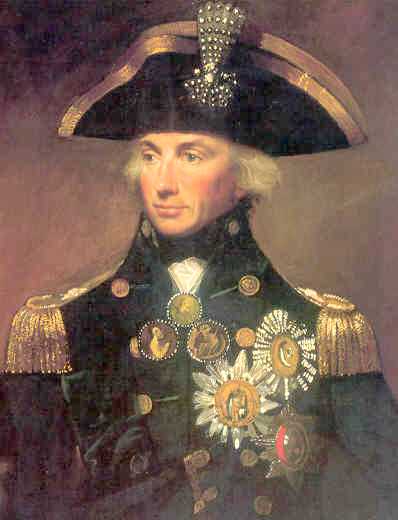
newly appointed Admiral Nelson took over the commission and the July 14 set off with the ships of Theseus line of 74 guns which hoisted its flagship Nelson and commanded by Captain Miller, commanded by 74 Culloden Captain Troubridge, Zealous of 74 commanded by Captain Hood, Leander of 50 commanded by Captain Thompson (this ship, from Lisbon, came across the square when the attack was already underway), the frigate Seahorse 38 under the command of Captain Freemantle, Emerald of 36 commanded by Captain Waller, 32-Tersichore commanded by Captain Bowen and Fox cutter under the command of Lieutenant Gibson, and a bomber, the command of Lieutenant Ray Crompton, who had found the way to the issue 15. In total 393 guns and 3,700 armed men.
The attack on Tenerife.
Lt. Gen. Gutierrez, captain general of the Canary Islands got ready to great effect defense, strengthening the fortifications and making the different strengths overlap your shots, thus making them very effective. Here we make a short stop to talk about this brave English general. Gutierrez was born in 1734 and had a great military record. Participated in Italy in the last campaigns of Philip V. As a lieutenant colonel commanded the force that drove the British Falkland Islands, recovering them for Spain. As a brigadier general turned to defeat the British under the command of the Duke of Crillon, in 1782, recovery of Menorca, and in 1791 took command of the Canary Islands. With the 1797, would be the third time that General Gutierrez would defeat the British.
forces that had Gutierrez were:
- The Battalion of the Canaries, highly trained elite unit. 247 men. - Hunter provincial, 110 men. - Militia Laguna and Orotava, 330 men. - grazers of Laguna, 245 men. - Flag of Cuba, 60 men. - Artillery veterans and militia, 387 men. - Pilots auxiliary countrymen, 180 men. - French Mariners (capture the Mutine), 110 men. In total 1,669
English and 91 guns. Canary The battalion also served as a training unit of the provincial regiments, constituted exclusively by militants of a very irregular military grade, as discussed below Gutierrez complain about this, but the rest of troops behaved and highly trained special, special mention to the artillery pieces that were used significantly and effectively. A penalty would not have been naval gunners and have had them in San Vicente months earlier. The sailors of the brig privateer La Mutine and that at the time of his capture was charged with the proceeds of their raids against the British, they wanted revenge for the loss of his ship, as the boats of the two British frigates and Minev Lively, which Jervis ordered the exploration of the island before landing, seized the boat in the harbor, while the commander and much of the ground crew was having fun carelessly. On 17
Nelson called the captains in his flagship British to prepare the plan of assault.
* Order of Nelson to his troops: First . The boats are kept meeting each boat towed each other, to have people board the same ship, and the boats in six divisions will land at about the same time. Second. Marines from the ships of the line will embark on their boats, which transported them. Third. From the moment when the boats are caught firing on them, bombard start their fire on the people, and keep it until the flag of truce to be flown by both the enemy and by us. Fourth. A captain has to take care to check that boats are removed from the beach so they can more quickly landed more men to pieces of campaign. Fifth. The frigates funds as soon as possible after the alarm is given, or that the forces ashore near the battery from the NE of the bay. Sixth. Are immediately ground forces, will go to the rear of the battery marked with a G. in the northeastern part of the bay and assault without loss of time taking possession of the summit of the hill that is about it. Each ship will land the number of men expressed by his side, with a corresponding proportion of officers, and captains have the freedom to send as many men as they wish, leaving enough to send the boat, and to operate the boat and another boat . Every master can be deemed free and direct land sailors, under the direction of Captain Troubridge. * Recommended to the sailors so many Marines uniform as can be, and that they have crossed the canvas straps. The Marine infantry will under the command of Captain Oldfield, the Marine official older, and he is bound to be under the direction of Captain Troubridge, and Lieutenant Baynes of the Royal Artillery, with his detachment. July 21. The officers and men of Culloden, only their weapons, they must be prepared to go on board the Terpsichore at one in the afternoon of this day, bringing with him four assault scales, each with a string of four fathoms long, sledgehammers, wedges and axes. The oars of the boats were lined with canvas or puce. The Zealous Culloden and build each one a platform for a barrel to 18, and a rope to Theseus drag artillery. Each ship iron manufacture as many sticks as possible, as has been the wood are very likely to break when used in a hurry. The Seahorse is a platform to build a cannon to 9. * (*) Plan of attack developed by Nelson from 17 July 21 accompanied by a sketch. [Shipping and translation of Manuel García]
This plan of attack was that the three frigates of the squadron, which had less depth than the big ships, they would come to shore as possible in the dark and disembark troops to attack the upper parts and batteries to the northeast of the city. Captain Troubridge's Culloden Navy would be responsible for the landing force. The bomber then Ray would open fire in the city at that time with their mortars. At dawn the ships of the line would come prepared to bombard the city. Unless the merchant ships that hayaran on the dock and loading and all the treasure or ingots that had landed in the city were handed over, the city would be destroyed by the bombing.
On day 18 the crew was devoted to the investigation of handguns. On 20 Troubridge moves to Theseus to receive final instructions and details of the operation. The landing force consisted of 200 men per ship line, 100 more for each of the frigates, supplemented by 80 gunners, ie about 1,000 men. The landing maneuver would comprise two phases. In the first ashore about two miles northeast of Santa Cruz pier on the beach of Valle Seco, to take involvement maneuver Castle High Pass. In the second phase, if it surrendered the city after winning Paso Alto, would head to the dock, to take from there the city.
Nelson * Order Troubridge: Theseus, at sea, July 20 Lord want you to take under your control the number of sailors and marines named to the margin (a), which will under the command of Captains Hood, Miller, Fremantle, Bowen and Waller, and the Marines under the care of Captain Thomas Oldfield, and a detachment of the Royal Artillery, commanded by Lieutenant Baynes, who are now embarked on the frigate Seahorse, Terpsichore, and Emerald. With this task you come near the Plaza de Santa Cruz as much as you possible, trying not to be discovered, and then shipped to all those men who can carry the boats and made their landing in the northeastern part of Santa Cruz Bay, near a great strength. From the moment you are on earth, I recommend that first assault the battery, after which, once taken, and secured his position, proceed to rob the people and the battery of the head of the pier, or send my letter, as I judge more by the way, which contains an intimation of which I am sending you a copy, and the terms must be accepted or rejected within the time specified, unless you see some good cause to extend, but not alter its meaning in the least, and you take out any other means it considers appropriate for the early implementation of my orders , which are the possession of all cargoes and treasures that can be landed on the island of Tenerife. Having the strongest confidence in his ability, courage and zeal, as well as all those under his command, I can only wish from the heart to succeed, and to assure you that I am your most obedient and faithful servant. Horatio Nelson [Shipping and translation of Manuel García]
Below are the intimidating letter Nelson wrote and gave Troubridge. Education is not wasted Nelson at the beginning of it. Today might seem even derision, but it was a language and customs of respect and admiration very common among senior officers even among countries at war:
* Start the message of intimidation to the square: Theseus, July 20. I have the honor to inform you that I have come to demand the immediate surrender of the ship Prince of Asturias, from Manila bound for Cadiz, belonging to the Society of the Philippines, with his full and complete cargo, and likewise all those shipments and properties that have been landed on the island of Tenerife, and not for consumption of its inhabitants. And since my ardent wish that not one of the inhabitants of the island of Tenerife suffer as a result of my request, I offer the most honorable and liberal terms, that if they are rejected, the horrors of war will fall on the inhabitants of Tenerife shall be charged by the world to you, and you alone, then destroy Santa Cruz and other towns on the island by a bombing, demanding a heavy contribution to the island. * Section 1. Be provided by placing strong when British forces holding the doors. * Article 2. The garrison will put down their arms, yet allowing the officers to retain their swords and that one, no status as a prisoner of war, will be transported to Spain, or remain on the island, provided their conduct pleasing to the commanding officer. * Article 3. Provided that they comply with the first article that I delivered shipments already mentioned, those people will require even the smallest contribution, on the contrary, shall be under my protection of all secure in their persons and property. [...] * (H. Nelson) [translated from the original Shipping and Manuel García]
Between 21 and July 22 starts the plan. However, the frigates with unexpected strong currents can not come within a mile of the coast and the city turned ALARM, losing the strategic surprise, but not the tactics, since no one knew where they were to disembark. Could not make a naval bombardment, since they could not get ships and frigates to be armed with direct-fire naval guns could not make effective fire. A big mistake was the bomber have provided only one shot curved mortar for elevation. Did not even have howitzers and its famous carronades was useless in this situation. Sailing boat in two formations. One consists of 23 boats and boats on their way to the precipice of Bufadero and the other with 16, was heading to the city center. But bad weather conditions and alerting the enemy made to abort the landing and returned to the ship with some loss of boats capsized.
At 10 am on 22 frigates, towed by their boats, anchored in the vicinity of the ravine Bufadero and land of 1,000 men who set foot on the beach of Valle Seco, despite the fire of High Pass. The landing took place in appalling conditions, some boats capsized in the dark due to ignorance of the area were very scattered, as well as field artillery in the absence of cavalry for their movements had to be carried by men, with fatigue and sluggishness this entailed. The defending forces sent previously by Gutierrez in the ridge height of the British slows, these forces were composed of about 165 men chosen from the garrison. Gutierrez about the possibility that more men landed commanded the battalion commander Canaries go to the nearby town of La Laguna for more militants and that he address them at the Valle Seco, cutting the possible progression of the British. Thus, with 30 men from his battalion and 50 civilians, occupied the same day 22, after a very rapid way, the objectives.
Throughout the 23 there was an exchange of rifle fire and cannon. The British, stuck and unable to progress came to reloading after giving Nelson the signal from the Theseus of withdrawal, with the loss of two men. The three frigates then sailed near the ravine Hondo Candelaria and trying to confuse and frighten defenders. But the fact Gutierrez is, again, was ahead of Nelson's intentions and had ordered forces in Santa Cruz, dejante High Pass Castle only 30 men, better trained forces deployed in the Castle of San Cristobal in the southwest, leaving the Canarian battalion in reserve to go where things got ugly. This coming and going of English troops made it appear that there were many more defenders.
Nelson After unsuccessful attempts was a career unusual situation to be resolved to save the honor of the Royal Navy. For the event to his captains to a meeting on 23 and told them, recognizing the failure of his plan original, which had decided a direct assault on Santa Cruz for the night. Nelson had decided to attack the center, going directly to the central castle of San Cristobal, where he was most of the English troops. Nelson ordered the attack, personally leading one of six groups of collision, the other five were commanded by Captains Troubridge, Miller, Hood, Waller and Thompson. Nelson
Jervis wrote: "take command of all forces intended to land under fire from the batteries of the city and tomorrow will probably be my head crowned with laurel or cypress."
course Nelson was reluctant to stay in their flagship as correspond to their degree of admiral and commander of the operation, and exposed to grave danger that could render command to the landing force. Courageous act, but irresponsible, as it turned out. Bombing
San Cristobal Castle before starting the landing and low effectiveness, because the shots were direct when using naval guns, rather than curved as would a mortar, paint Esteban Arriaga.
At 10:30 pm on July 24 British marines and sailors around the ship were Zealous where they formed the six groups, with 700 men. In addition to the boats accompanying them the cutter Fox, with 180 chosen men and 80 in a schooner captured Canary several days earlier. Rowing wrapped in cloth so as not to make too much noise began to move the two miles that separated them from the beach. Could reach the cannon shot from shore (300 meters) before being discovered by the English frigate San Jose, which was anchored 500 meters from the pier, followed by Castle High Pass. The battle was waged in 5 fronts, the principal, the area around the Plaza de la Pila, the ditch of Santos, the beach of the carnage, and the monastery of Santo Domingo. However the first that landed on the beaches were wrong and had confused the rest of the troops, plus most of their ammunition was unusable by the waves and lost part of climbing ladders. The rest of the groups was surprised by sustained fire from English batteries opened fire from High Pass to the Castle of San Telmo with all sorts of projectiles, shrapnel and musket musketry, which caused the sinking of the cutter Fox with loss of 97 men. According to the attackers themselves looked like hell. Some of the commanders of batteries Paso Alto, San Miguel, San Antonio and San Pedro were fighting for the glory of wisdom have sunk to the said cutter. "The commander of Fort San Pedro, which was under his command and was the most immediate the pier, said he was the first English spotted the boat and told the other strengths with a gun who shot him. This fact is very important and probably accurate, because nobody corrected later. "(John Arencibia)
* [To be alerted] referred to four batteries at once started a fire so alive and so united, that when the sea swallowed the cutter and thus the four batteries were scuttled it because a single shot, two, three or four of a battery, would not have destroyed so quickly. (Francisco de Tolosa. Captain of the provincial gunners )
The eve of the attack opened a loophole in the wall of the castle of San Cristobal where he placed a cannon of 24 pounds at low altitude, to hinder the English landing on the beach that separated the castle of San Pedro. It is possible that, as the tradition, they were the Tigre cannon, but it is an unprovable fact as they were numerous guns in the crossfire, English tried to prevent access to the beach and pier. Without going to land Nelson was wounded in his right elbow by shrapnel as hell will fall from heaven, while Richard Bowen, commander of the Terpsichore, dies. Later, Nelson was angry with the British Admiralty, because it was ignored when applying for a monument or a plaque in the Cathedral of St. Paul in London in memory of Bowen, not even a mention in Parliament, the man who was considered one of the most promising British officers. The Admiralty replied that they did not do homage to those who had staged an unfortunate fact of British arms. With things like this can understand the "fans" have English deeds and not only defeats.
Bowen After the death of only a small group of accomplished British cannons and nail to land on the dock "was so alive and so fed the fire of musketry and shrapnel that made us from the citadel, windows and roofs of surrounding houses, which was not poible go one step further, and the ground was strewn with our dead bodies. "(part of Nelson Jervis, July 27). In the end they give up and over fifty men are taken prisoner.
Lieutenant Josiah Nisbet (Nelson's stepson) Nelson caught as he fell injured on his boat. "I am a dead man," he murmured as Josiah made him lying in the boat, then tore black silk handkerchief of her own neck and tied it as a tourniquet around his wounded arm. Josiah saw the admiral's life depended on an immediate return to the ship and the surgeon. Nelson refused to be boarded the frigate Seahorse that was the closest ship, due to the distress that would hoist Betsey Fremantle captain and would have disastrous consequences for the morale of the troops, so the boat went further to meet the ship Theseus. His right arm hung helpless on the one hand while leaning to the left to go on board the ship. "Let me go alone," cried the wounded Admiral "I have yet my legs and one arm useful. Tell the surgeon who was in a hurry to prepare their instruments, know that I must lose my right arm, so the sooner the better." A brave act to so disastrous landing. The rest of the group stranded or lands in other areas where they are harassed by militias.
on the beach of 450 British Carnicerias manage land belonging to three of the six groups, which are directed to the center of the city under heavy fire. Unsuccessful attempt to take the fort of San Cristobal in the rear, despite the setbacks, and showing great arrogance, Captain Troubridge send a message to General Gutierrez to urge him to surrender, which naturally was rejected outright (these messages from the British officer were likely to win some time, so that potential reinforcements give them time to get into position). Then fail survivors locked up with 340 men under the command of Troubridge and Hood in the Dominican convent of La Consolation, but it was knowing that this situation was untenable, as British warships could not come to give reinforcements to the troops landed. The British captain had only 80 Marines, 80 spearmen and 180 sailors armed with muskets.
The remaining two groups of British landed on the beach at the Butchers and advanced through the gorge of the Saints. His attacks are successful at first, but the battalion's flank attack Canary with items of Cuba and Havana, pushing them to the Plaza de Santo Domingo, where they join Troubridge forces which are completely surrounded.
The Battalion of the Canaries, on order, took the spring to cut off the retreat of Troubridge and the arrival of reinforcements. The regiment of La Laguna is directed to the pier in two columns, one for the rear of the Plaza de Santo Domingo, to prevent the progression of the British in the interior, and the other column along the coastline. Payments and the movements of the defenders were executed quickly and efficiently.
Nelson tries to strengthen Troubridge am sending 15 boats to the dock. Drown coastal batteries three others veered and returned to the ship. The battery in the spring, before unused now he was back in service, making it impossible for another attack. Captain Troubridge
after another ridiculous message urging surrender and realizing the sad reality Hood sent to parley with the governor. General Gutierrez that day was July 25 flare, though it forced the enemy to negotiate, which was really a capitulation.
These were the conditions of trading.
* "Santa Cruz, July 25, 1797 troops & c. belonging to His Britannic Majesty will be shipped with all its weapons of any kind, and take their boats if they are saved, and they were players expanded others as needed, in consideration of which in turn are obliged not to disturb the people in any way the British Fleet ships that are before him, or any of the islands in the Canaries, and prisoners be returned on both sides. Given under my hand and my word of honor Samuel Hood
Ratified by T. Troubridge, commander of British troops. "
Nelson, who had always distinguished men behaved honorably in war write on board his vessel a letter of thanks to General Gutierrez for the treatment of his men and handed Troubridge day after he was preparing to collect the wounded Britons who were in hospitals in the city.
* "Theseus, on the outskirts of Tenerife, July 26, 1796 (date error) I can not separate the island with VE gives the most heartfelt thanks for your kind attention to me, and for humanity that has said the wounded of ours who were in his possession or under his care and generosity by all who had landed, so do not stop doing this to my Sovereign, and I hope over time to assure Your Excellency personally as VE'm obedient humble servant Horatio Nelson "
To which the general replied:
* "Sir, my maior attention: With pleasure I have received the VS very noticeable effect on your generosity and good thinking, for my part think that no man deserves laurels only to satisfy what humanity dictates, and this reduces what I have done for the wounded and those who landed, to whom devotion to consider as brothers from the moment they finished the combat. If the state has led to the VS always uncertain fate of war, could I, or the effects Whosoever this Island produce, be of any use or relief, this would be a real pleasure for me, and I admit limetones VS a couple of wine I think the worst is not produced. Serame personally very satisfying treat Quando as circumstances permit, to sugeto of so worthy and desirable items such as VS says, and meanwhile I pray God save your life long and happy years. Santa Cruz de Tenerife July 27, 1797 VS BLM your obedient servant safer. Dn. Antonio Gutierrez "
Nelson also pledged to bring the news of victory to the Peninsula. Unlike the English enemy casualties were not excessive, with 30 dead and 40 wounded only, the British suffered 177 deaths by drowning (due to sinking of the Fox and numerous sunken boats by fire or wrecked), 51 combat deaths, 5 missing and 128 injured. Of the total casualties were 7 officers killed and 5 others injured). As mentioned above Nelson was one of the wounded officers. In addition there were many prisoners who were returned to their ships. In Spain, taken as a revenge for the defeat at San Vicente six months ago, and since then the British were far more substantial losses (and number of senior officers dead and injured) sustained in that battle. Low
suffered by British officers in the assault on July 25, 1797 BuquesMuertosHeridosAhogadosDesaparecidosTheseus
12 34 25
- Culloden
3
18 36 - Zealous
5
21 - - Leander
6 5 - Seahorse
1 2
31 - - Terpsichore
8
11 - 4
Fox (sunk) -
- 97 - Emerald
8 12 10
-
Total
44 177 123
5 Officers killed: - Richard Bowen. Terpsichore Commander - George Thorpe. Terpsichore official - John Weterhead. Official Theseus - William Earnshaw. Leander official - Robinson. Leander official - Baisham. Emerald officer - Gibson. Commanding Officer of Fox
Officers wounded: - Horatio Nelson. Admiral. Commander in Chief. - Thompson. Leander Commander - Freemantle. Seahorse Commander - George Douglas. Seahorse official - midshipman Watts of fatalities Zealous of English forces from Tenerife - Don Juan Bautista de Castro. Lieutenant Colonel of the Regiment of La Laguna - Don Rafael Fernandez. Canary Battalion lieutenant - Antonio Miguel Gonzalez. Canary Battalion - Manuel Fernandez. Idem - Luis Nuñez. Idem - Antonio Delgado Sosa. Minuteman - Jose Benito. Idem - Juan Pacheco. Idem - Bernardo Garcia. Idem - Dionisio González. Idem - Domingo de Leon Padilla. Idem - Felipe Guerra. Idem - José Pérez. Idem - Don Carlos Rooney. Paisano - Don Agustín Quevedo. Idem - Don Antonio Espinosa. Idem - Don Domingo A. Pérez. Idem - Don José M. Calero. Idem - Don Juan de Regla. Idem - Don Juan Amaryllis. Idem - Pablo Duaure. Assistant. Natural France - Juan Chibeau. Idem. Idem transferring to the British became with difficulty, since they had lost many boats and boats in the attacks and had to help with boats and two English brigs. The general left to re-embark on the enemies with guns and with honors of war, when they had been given up and if any prisoners. It is true that the untrained, undisciplined and unarmed militia, little to almost nothing could be done, for which Don Antonio drafted a proclamation which recognizes the indiscipline and the lack of military spirit of these troops and amendment of bugs found in units combatants involved in the defense of the Plaza de Santa Cruz de Tenerife that day, July 25, 1797.
* Report of Troubridge Nelson: Culloden, July 25. Lord Due to the darkness of the night did not immediately find the dock, the point made for landing, but I moved to the coast under the battery of the enemy, not far south of the citadel, Captain Waller landed at the same time two or three other boats. The surf was so great that many fell, the boats were filled with water in an instant and crashed against the rocks, wetting most of the ammunition stored in the bags. As soon as I had met a few men I moved immediately to Captain Waller to the plaza, the venue, hoping to meet there with you and the rest of the people, and waited about an hour, during which time I sent a sergeant with two men of the people to intimidate the citadel. I suspect the sergeant killed in office because I have not heard from him since. Lost all levels of assault in the surf, or not possible to find them, could not make any assault on the citadel, which is why I went to meet with Captains Hood and Miller, who had known who made good his landing, with a portion of men, SW of where I had done. Then I tried to purchase some news from You and the rest of the officers, but without success.
At dawn we had gathered about eighty soldiers, Marines) eighty sailors armed with pikes and one hundred eighty sailors knew that these were all left alive who had done a good landing, with is tas forces, having procured some ammunition for the English prisoners we did, we were going to see what could be do with the nonstop assault citadel, and the streets are all defended by field-pieces, and over 8000 English and 100 French military over all the avenues. Like all boats were destroyed, and saw the possibility of more men on the ground, with wet and ammunition out of supplies, sent to Captain Hood with flag of truce to the Governor to tell I was prepared to burn the village, which would put into effect immediately if it approached an inch, and at the same time that the captain wanted Hood said this would be done with regret not wanting to harm the inhabitants, that if I accepted my terms, I was ready to parley, to which he responded. I have the honor to send you a copy of them by Captain Waller, which I hope is consistent with their approval, and seem very honorable. Due to the small number of men, composed mostly of sailors armed with pikes and guns, can only be called irregular, with very little ammunition in the bags but had dipped in the surf at landing, could not expect to succeed in any attempt against the enemy, whose strength than I have already mentioned. English officials assured me that we expected and they were perfectly prepared, with all the batteries and the aforementioned number of men under arms. This, coupled with the great disadvantage of a cliff, a heavy swell and deal with forty guns, display, although we did not succeed, what can an Englishman. I have the pleasure to inform you that on our return march through the town with the British colors waving in front of us. * PS May I also say that, once signed and ratified the terms, Governor gave us in the most generous with a lot of wine, bread, etc., To refresh people, giving us every mark of attention in his possession. Thomas Troubridge [Shipping and translation of Manuel García]
Under the conditions of negotiation the British were concerned that there was no record anywhere the word surrender or capitulation, when it was so much to be said, and cling's where the British when they say that in this battle Nelson did not surrender, but have never concealed that it was a tragic day for his navy. I say as I say was an unmitigated defeat for the number of men killed and wounded, damage to boats and ships and mainly, because it failed to achieve their goal to take over the city.
In the afternoon of 26 British ships surrendered funeral honors, with 25 guns and lowering their flags in memory of the late Commander Bowen, commander of the frigate Terpsichore, who died the previous day. The Emerald frigate delivered in Cadiz, as Nelson had promised, the part of the English victory.
General Gutierrez had shown great military intuition to thwart all attempts at landing, anticipating the movements of the British, took the ground and exploded the possibilities of his forces being obeyed his orders with precision. He was joined by the great mobility of the elite troops and gunners who had managed to sink many boats and a cutter.
His Majesty King Carlos IV ascends Gutierrez, giving the Knights Esparragal also on the order of Alcantara. His health worsened and shortly before four o'clock in the morning of April 22, 1799 was called the family doctor who diagnosed palsy (paralysis of the arm and leg). He died on 14 May of that year and was buried in the chapel of St. James of the parish of Concepcion Santiago Santa Cruz de Tenerife. Nelson
had made a disastrous action. Without denying the value of this ocean, acted in a manner so audacious as ill-conceived plans. Great strategist cabotage operations had shown that in transactions outside the ship failed miserably, as happened also in Cadiz and Brest. Nelson's confidence in itself and, above all, the underestimation of the defenders, were the main reason for their defeat. According to statements made by Troubridge beaches were unknown, hydrography and meteorology of the area. The sea state meant the dispersal and sinking some boats. The naval bombardment was ineffective as we stated earlier, and there was only one armed with mortars bombard the only weapon capable of hurting defenses, so the number of troops was insufficient for such an enterprise. They landed 1,000 men against 1,600, but Nelson believed that the English were even 8,000, due to the mobility that they had and it seemed there were more supporters, which made the attack even more reckless. A blow to the ego of Nelson and his arrogance.
* Official Report Jervis Nelson: Theseus, July 28, compared to Santa Cruz Lord In obedience to his orders to make a vigorous assault on the village of Santa Cruz on the island of Tenerife, send from the various ships under my command 1000 men, including the Marines, to prepare for landing under the direction of Captain Troubridge's Culloden ship, and captains Hood, Thompson, Fremantle, Bowen, Miller and Waller, who voluntary and very kindly offered his services, and although I am under the painful necessity of informing you that we have not been possible to succeed in our assault, it is my duty to say that I think never more daring courage was shown by the captains, officers and men you did the honor of placing under my command, and the report that I send attached, I hope will convince you that my arrangements, humble as they are, have been exercised on the occasion present. I enclose also a list of the dead and wounded, and among the first, with deep pain and I have to put the name of Captain Richard Bowen, the ship Terpsichore, the more enterprising officer, competent and courageous who served in the Her Majesty's navy, and with great sadness I have to mention the loss of Lieutenant John Gibson, commander of the cutter Fox, and a large number of brave officers and men. (H. Nelson) [translated from the original Shipping and Manuel García]
Lieutenant Josiah Nisbet, Nelson's stepson, is standing behind him and saves his life by doing a torquinete prevents loss blood. Behind him and the left are two lieutenants. Also in the barge and right of the group is a third lieutenant who grabs the boat with two sailors behind him. In the left foreground is standing in the water is Captain Thompson, with another lieutenant. Table of the National Maritime Museum, London, Greenwich Hospital Collection. By Richard Westall.
Castles Santa Cruz
When Nelson attacked or they were, from north to south, the castles and fortified redoubts: Torre de San Andrés, Castle High Pass, Fort San Miguel (at the mouth of Tahodio ravine), Santa Teresa batteries (On the right bank of the ravine), Candelaria, Santiago, San Rafael, Pilar, San Antonio and Santa Isabel (all in the vicinity of the solar current barracks occupied by the Almeida), Fort San Pedro, batteries de la Rosa (along the Alameda), pier and Santo Domingo (near the castle of San Cristobal), or Principal Castillo San Cristobal de la Concepción batteries (which are the Cabildo building), San Telmo (right bank of the ravine Santos ) and San Francisco (in the Caleta de Negros), castle of San Juan and batteries Crosses and Barranco Hondo (Puerto Caballos). These castles and fortified redoubts armed with nearly a hundred guns and a dozen mortars, were united by a wall and made a square of Santa Cruz virtually impregnable. Was never occupied by the enemies of Spain.
According to tradition on the day of battle, July 25, 1797, shooting that wounded the great British admiral was done with the gun called Tigre. " For the gunners always liked to name their guns. In the eighteenth century, this name was even engraved on the bronze each. "Tigre" was a cannon that had been cast in Seville in 1768. Today you can still see the Regional Military Museum de Canarias in Tenerife.
Title and privileges
This success led to the council to apply for title and merit, and this was so, in fact, once retired British ships in the bay of Santa Cruz, confirming the failure of issue The authorities thought to assert their merits before the monarch and also their gratitude to the sky that had protected.
Thanksgiving was the subject of a collective expression, led by the council, which was held on July 29, 1797 and where he hailed the patron saints, the full name of the place, since then, called Santa Cruz de Santiago Tenerife.
The truth is that the city, not without misgivings, eventually asking the Crown, with great discretion, three things as one: the title and privilege of Villa, rating a very Noble and Invicta Villa, Port and Plaza , and changing its name.
Contrary to what was standard procedure in such cases, the procedures were resolved fairly quickly and the November 21, 1797 signed the royal decree which was granted the title of Santa Cruz village and the privilege of villazgo.
With the arrival of the news, the council resolved to live three nights of lights, with drums and ringing of bells, and although the issue original title was immediate and lost the file after three years everything was settled. (From: http://www.mgar.net/docs/gutierre.htm)
The port of Santa Cruz de Tenerife, suffered throughout their history three naval attacks carried out by British forces, represented on his shield in the form of three heads of a lion, the heraldic animal of England
* Attack of 1657: during the Anglo-English war that pitted the British Commonwealth led by Oliver Cromwell against Spain under the reign of Felipe IV, British navy Robert Blake and Richard Stayner entered the harbor and destroyed the fleet of the Indies Diego de Egües;
* Attack of 1706: during the English war of succession following the death without heirs of Charles II, Vice Admiral John Jennings intimated to the English authorities to join the Austrian faction. The mayor Rojas José de Ayala and organized the defense against the British fleet, he retired from his position on the city
* Attack of 1797: The British fleet commanded by Admiral Horatio Nelson was rejected three times by the forces led by General Antonio Gutiérrez de Otero, in the framework of the French revolutionary wars.
Correa Corbalán Corporal
Following the resounding victory of English forces on the men disembarked nies by Admiral Nelson in Tenerife, General Antonio Gutiérrez rose to the top echelons of English a request for the most important rewards in Week of July 25, 1797. As expected the controls included more meanings, which are intended for immediate use superior. In the relationship were the chiefs and officers, Salcedo, Marquelli, Estranio, Guinther, Greagh, Prat, Rosique, Siera, etc.. All normal. It was a widespread increase request on which all were given the same merits, which ultimately proved ineffective, because there was no promotion.
There was an exception, because to include it in the relationship specified their merits detailed. General Gutierrez made a special mention out of the Regiment of Guimar Diego Correa, who proposed to the rank of sergeant. It was a good jump. What were its merits? For
Correa was on duty at the battery of the Conception. From his position he saw the morning of July 25 a boat foundering British when they tried to approach the coast. Correa harangued a handful of soldiers and launched on the British who were trying to reach the beach. He fought against them and captured 17 prisoners that led to the castle of San Cristobal to everyone's surprise. Also seized their weapons, including a small cannon campaign.
Correa was born in La Laguna in 1772, was an adventurer. She married at age 19 Bottino Pilar, the daughter of a Genoese merchant living in La Laguna. In 1803 he was promoted to sergeant. After practicing mounts guard over a year, sailed with the rank of captain to Cadiz in 1808. In 1910 the United States appears later in Havana, in Gibraltar, Madrid ... In 1836 he was appointed mayor in the Philippines, where he died in 1843.
coat of arms of Santa Cruz has three severed heads of lion, the heraldic animal of England. The British have seemed to have a special inclination to conquer the island. Therefore, the three lion heads recall the three victories achieved against these: Blake (1657), Jennings (1706) and Nelson (1797). Of the three, the most important was the last. Following this victory, King Charles IV gave Santa Cruz the category of Villa, his honorary degrees, his coat of arms and its incorporation as a municipality.